The “I Know Best” strategy
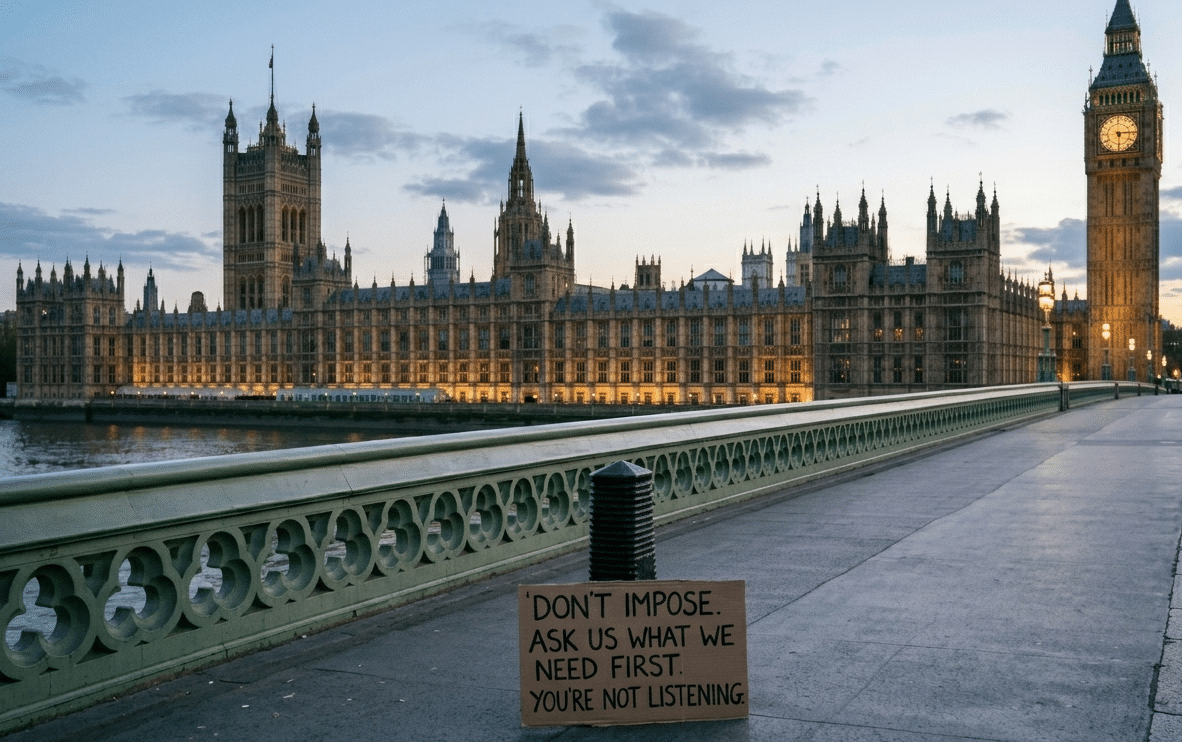
Corporate boardrooms and government halls often share the same “I know best” energy. This creates an eerie parallel between massive multinational corporations and governments. Both have become expert masters of presumptive design.
They are incredibly confident in their ability to tell us exactly what we need, want, and desire. All without ever asking a single question of the people they serve.
It’s a classic pattern, they spends months (and millions) crafting a solution to a problem they haven’t actually discussed with the people living it.
Whether it’s a law or a mandatory new enterprise software, the cycle is usually the same:
The Assumption:
“We’ve analysed the data, and this is exactly what our citizens/customers need.”
The Rollout:
A “revolutionary” new initiative is forced down the pipeline without taking the end users into account.
The Shock:
Leadership is genuinely confused when the response isn’t gratitude, but friction, low morale, or outright rejection.
The Reality Check:
Data tells you what is happening, but it rarely tells you why. When you skip the step of actually asking people about their pain points, you aren’t solving problems, you’re just imposing preferences.
Efficiency is great, but it’s no substitute for empathy.
- If you want buy-in, try starting with a conversation instead of a mandate.
- If you want acceptance, try allowing your customers/citizens to make a decision. Don’t force the “Upgrade”.
When companies grow too big, they stop being partners to their customers and start acting like architects of a reality their users didn’t actually vote for.
True innovation shouldn’t be an executive mandate, it should be a conversation. It shouldn’t be trying to shoehorn things where they don’t belong. The most successful products of the future won’t be the ones that tell users what they need, but the ones that start listening and adapting.
AI is great and the current buzzword used for marketing and lawmakers. But sometimes a user just wants to resize an image. A simple task that can become extremely complicated by the implementation of AI and “The Cloud”. Or how about the need to change your address and finding that you can only do it by going through an AI chatbot. You think these examples are ridiculous. But they are not, they are the reality of todays world.
When was the last time you felt a product was built for you, rather than imposed upon you?
Stop guessing what people want and start asking.